
Search

Targeting physicians for pharma – Product strategy explained

Targeting physicians for pharma however the quantity of medications endorsed by the FDA has expanded from a normal of 23 every year somewhere in the range of 2000 and 2010 to 38 every year somewhere in the range of 2011 and 2018, the normal income per drug has declined fundamentally. The last option pattern is relied upon to proceed deals conjectures for late-stage pipeline resources have declined by in excess of 50% starting around 2010. The declining normal pinnacle deals and extreme rivalry limit the chance to boost returns from new dispatches.

The greater part of the new medications dispatched in the United States somewhere in the range of 2012 and 2017 were forte medications (65%); a huge number got need surveys (60%), while a sizable piece were for treatment of vagrant illnesses. Three out of 10 items were endorsed for uncommon illnesses.

While more than 33% (36%) of the medications failed to meet expectations in the primary year following dispatch, about half (48%) beat investigator assumptions. Eminently, one out of four (26 percent) of all medications far surpassed assumptions, producing over two times the normal deals. The littlest extent of medications (16%) fell in the center: meeting assumptions inside a 20 percent edge.

Results Targeting physicians for pharma are reliable with earlier examinations that saw that if an item neglects to meet dispatch year assumptions, its likelihood of recuperating income in ensuing years decays strongly. Considering that the normal time period from dispatch to top deals is around five years and keeps on contracting, the significance of the dispatch year for the general item life cycle will keep on developing.

Our examination Targeting physicians for pharma recognized three item qualities that have measurably critical relationship with the probability of meeting or beating examiner deals estimates: items getting need audit by the FDA, forte medications, and vagrant medications. Two other items have a positive yet not measurably critical relationship with item execution at dispatch: first-in-class and biologics.

A higher extent of vagrant medications (73%) contrasted with nonorphan drugs (57%) met or beat expert gauges for years. Once more, there is extensive cross-over among vagrant and forte items: Eighty-seven percent of vagrant medications end up being claimed to fame. The Orphan Drug Act gives impetuous and expanded market restrictiveness for pharma organizations that foster medications to treat little persistent populaces. 6 Research shows that producers can charge premium costs for vagrant medications: In 2018, the normal cost for vagrant medications was 4.5 occasions higher than nonorphan drugs.

Read my more blogs from here
Want to read more such exciting articles and posts?

We will send you a monthly email with a digest of most happening news and events from the sector, straight to your inbox!

Subscribe to our newsletter

Latest Posts

FREE!

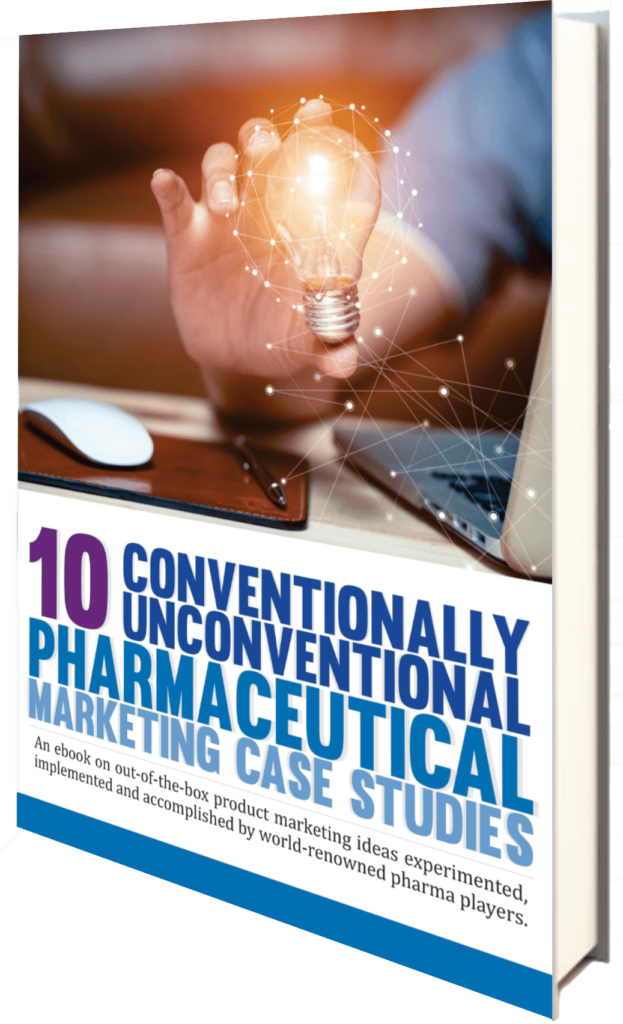
Download our free eBook on out-of-the-box Pharma product marketing ideas experimented, implemented, and accomplished by world-renowned players.

What's CME World?

At CME World we bring to you the best possible elearning medical webinars and courses which will help to build your evidence-based practice. We have partnerships and associations with major Indian and international associations, this helps us to design courses which are at par with international universities.

More Articles

COVID-19 vaccine hesitancy
Mayur Kumar

COVID-19 vaccine hesitancy – A marketing strategy aid

COVID–19 vaccine hesitancy in the University of Notre Dame’s new test recommends that experts in unpredictable regions need to cooperate to beat the overall social crisis and that science can profit from utilizing immunization card advancements similar as their brands with clients do. “Market division procedures can be utilized to survive” COVID–19 vaccine hesitancy “and other wellbeing emergencies,” says Mitchell Olsen’s Journal of Consumer Affairs, Mitchell Olsen, speaker in publicizing at Mendoza College of Business, Notre Dame, with Matthew Meng of Utah State University. After the fundamental conveyance of COVID–19 vaccine hesitancy in mid–2021, some broad government assistance offices and officials acknowledged that by July fourth, mass opposition could be accomplished all through the US populace. Immunization rates started to decrease in pre–summer as individuals frantic to finish a neutralizer had so viably. Over 30% of grown–ups in the US are not yet completely immunized. The gathering led a public review of inoculation stocks to show how a pattern of market sharing can be productive. “Our survey found huge contrasts between four gatherings with decreased COVID–19 vaccine hesitancy in the nature and strength of the clarifications for their loathing for the immunizer and the reactions to which they are for the most part open,” said Olsen. “Now we discussed how affiliations, like the CDC, can select support trained professionals and purchaser specialists in future wellbeing crises.” In May, the gathering led a specialist review of 1,068 grown–ups in the United States.S. who were not inoculated or to some extent inoculated and viewed themselves as probably not going to be completely vaccinated. All individuals exhibited the significance of 16 clear explanations behind deciding not to be completely immunized. it trains them to be completely inoculated. Results, including portion profiles, were considered subsequent to partitioning respondents into one of four segments: unvaccinated refusals, unvaccinated reluctant, halfway refusals, or half delays. in the event that you can demonstrate that you will not or presumably not get the COVID19 immunizer or then again, if relevant, the back part. Read my more blogs from <a href=”https://www.cmeworld.org/author/mayurkumar/”>here</a>

Read More »

Stay in touch with us and grow your business!

© All Rights Reserved 2021